
Ceramic Restoration of Worn Teeth
Shortened, uneven teeth rebuilt to their correct shape and height with ceramic crowns
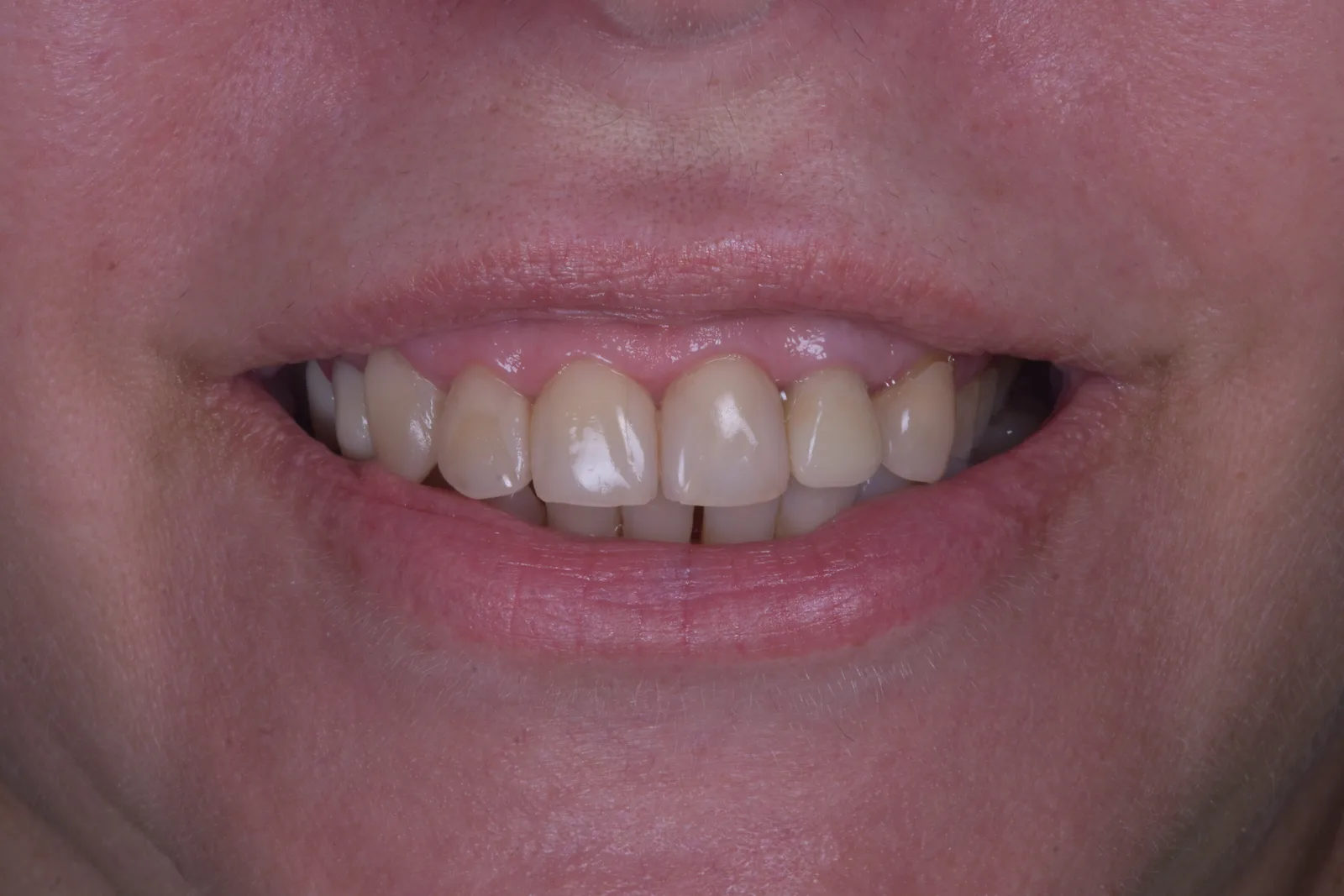 Before
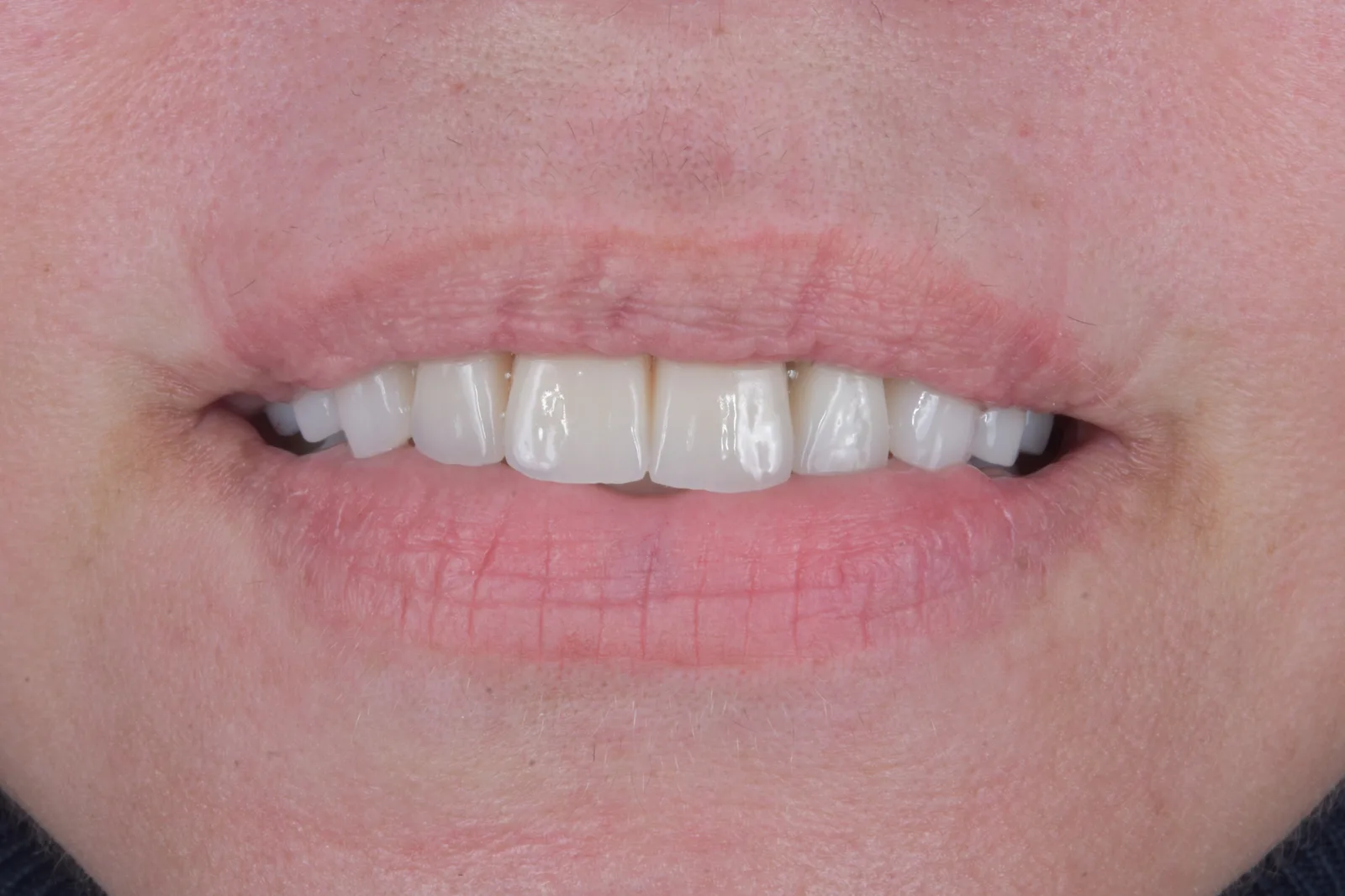 After
AfterThe patient came in with teeth that had worn down over many years. The edges had become shortened and uneven, the colour had darkened, and the smile no longer looked the way the patient wanted. Wear develops slowly and quietly, and by the time it is noticed it usually affects many teeth at once rather than just one.
Examination showed generalised wear: shortened and uneven incisal edges and a loss of the original shape of the teeth. The teeth themselves were sound enough to be restored rather than replaced, so the plan focused on rebuilding their anatomy in ceramic.
Restoration of the worn teeth with ceramic crowns, rebuilding the height and shape lost to wear and returning an even incisal line across the smile.
Assessment and planning
The extent of the wear was assessed and the shape and height of the future restorations planned before any treatment began.
Preparation
The teeth were prepared for ceramic restorations, preserving healthy tissue wherever possible.
Ceramic restorations
Ceramic crowns were made and fitted, rebuilding the lost height and the natural anatomy of each tooth.
Fitting and bite check
The finished restorations were checked in the bite and adjusted so that contact was even across the whole arch.
The worn teeth are restored to their correct height and anatomy. The incisal line is even again, the colour is uniform, and the smile looks natural both close up and in the retracted view.
Worn teeth lose height as well as shape. As the edges shorten, the smile line flattens, less tooth shows when speaking, and the lower face can begin to look shorter. Restoring worn teeth is therefore not only cosmetic: rebuilding the correct height restores how the teeth meet and how the whole face is supported.
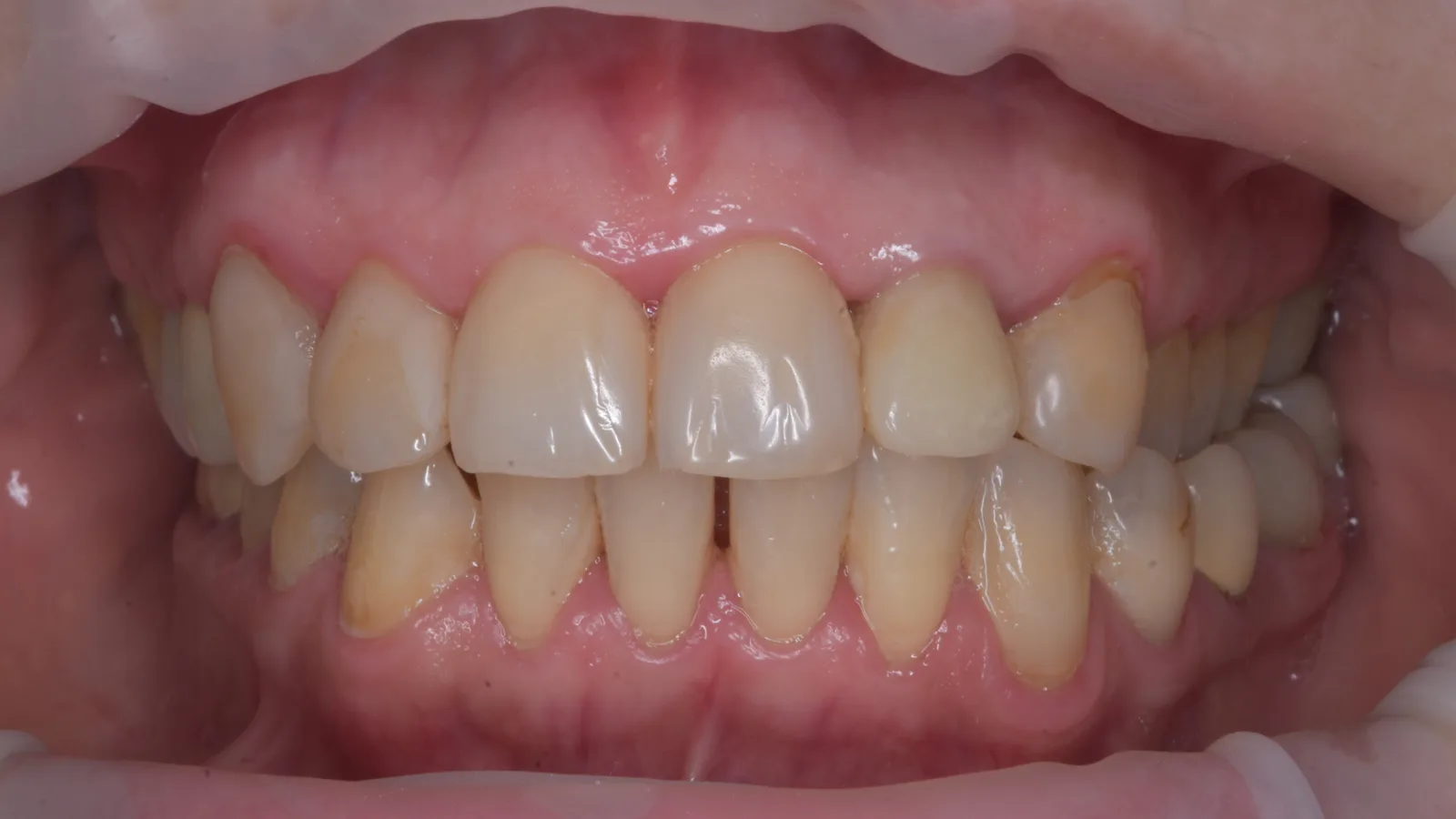 Before
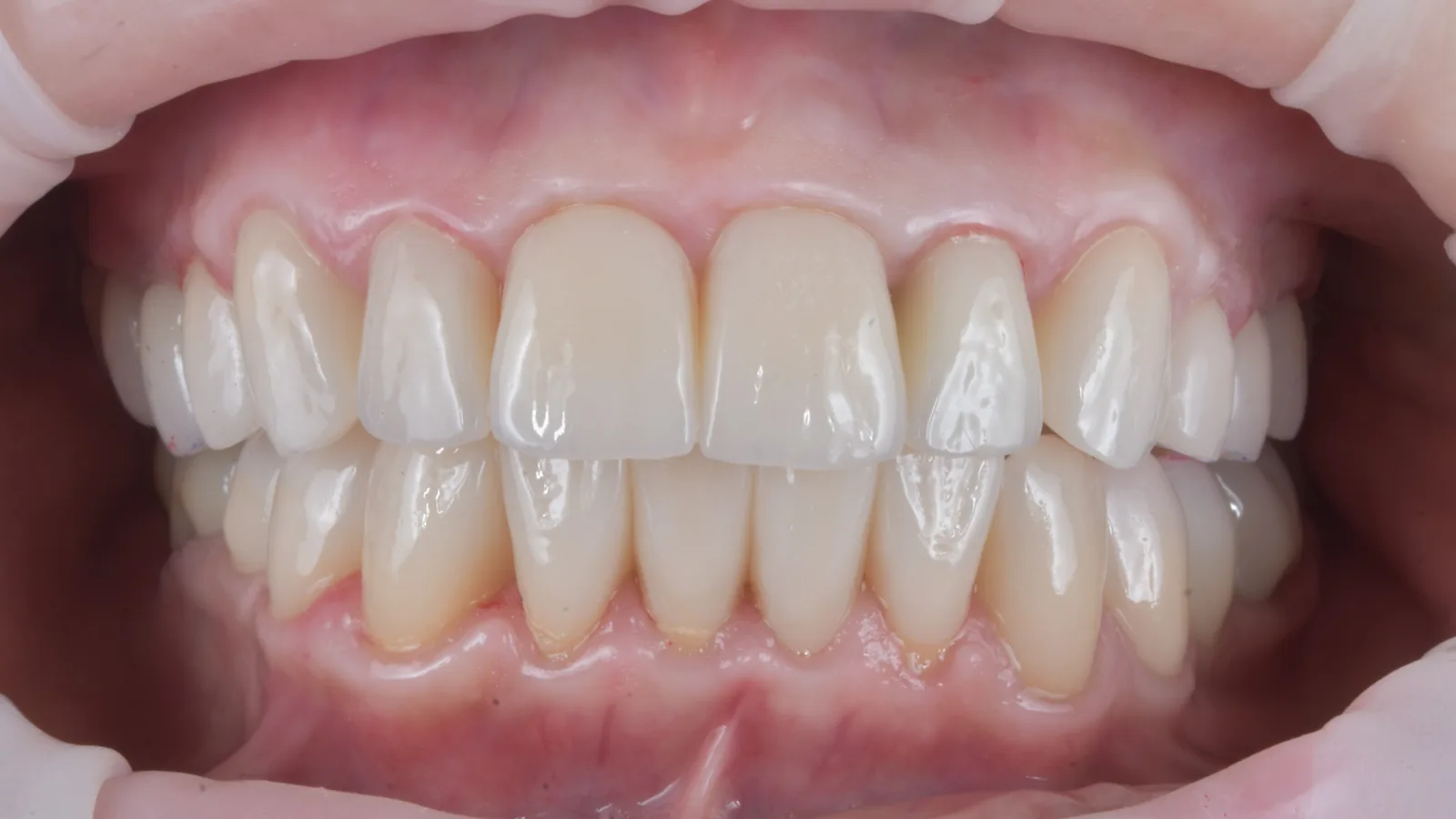 After
AfterPhotos published with patient consent