
Full-Mouth Restoration, Staged by Jaw
Worn and broken-down teeth in both jaws, rebuilt one jaw at a time with therapy, implants and ceramics
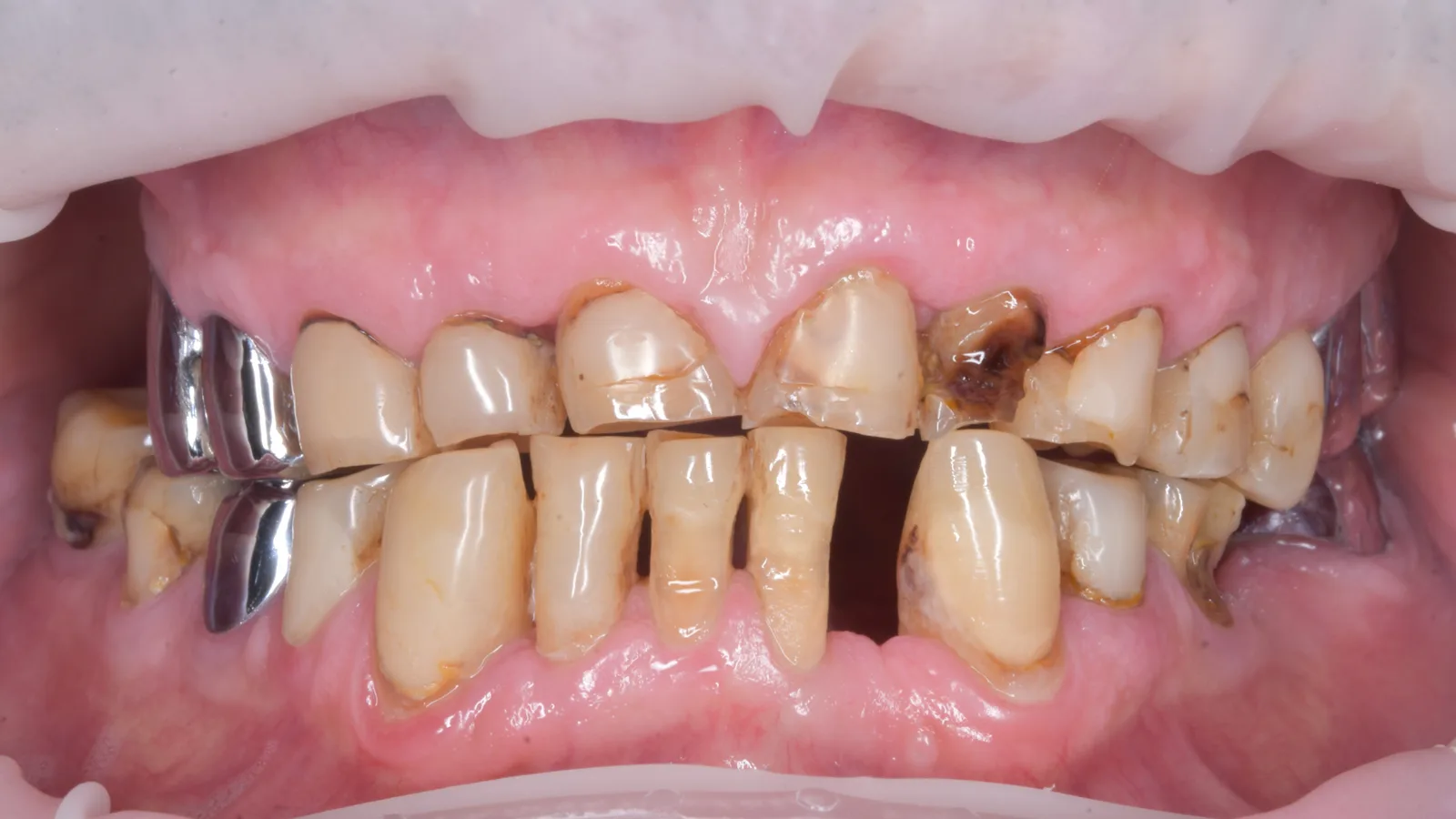 Before
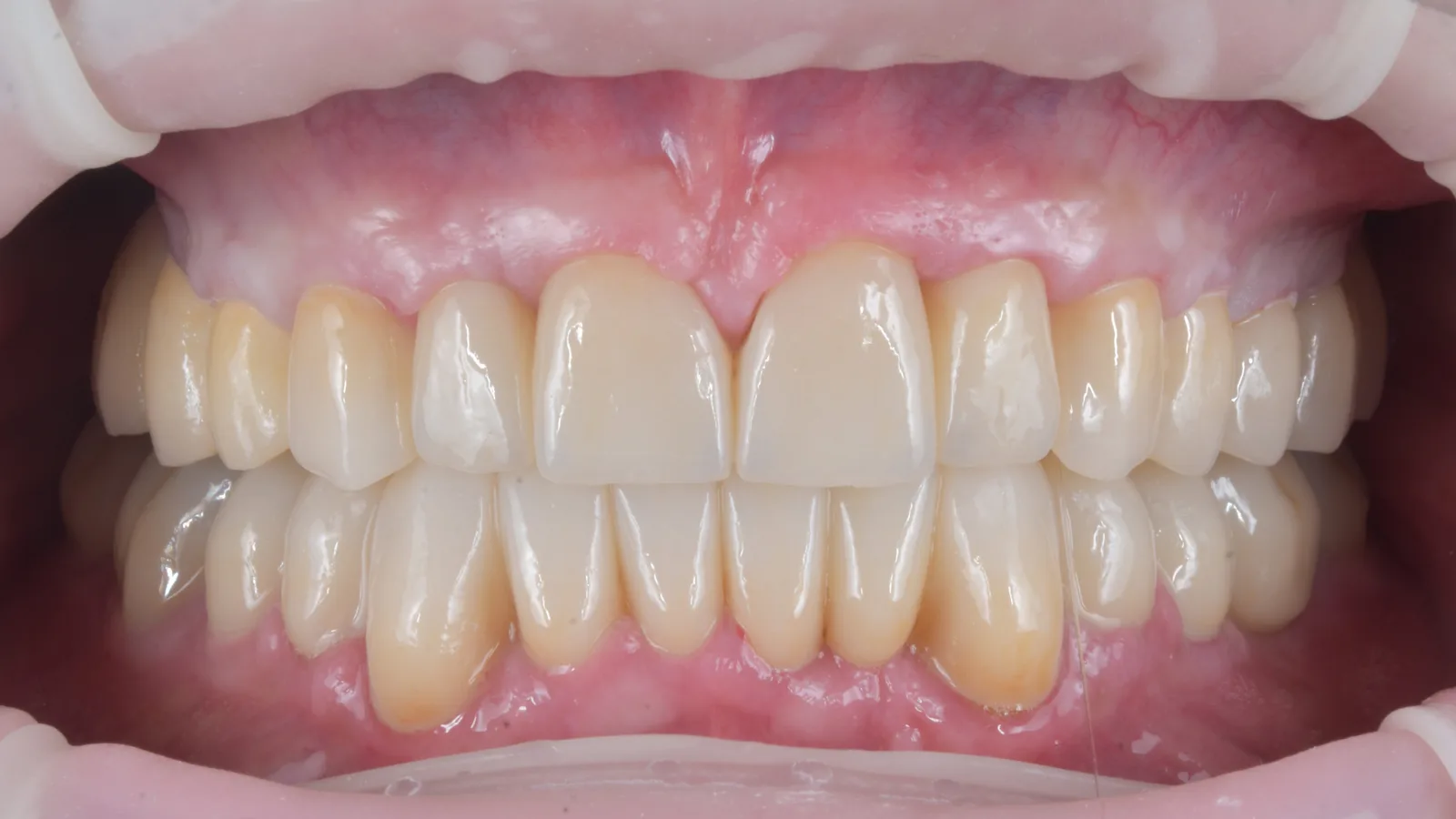 After
AfterThe patient came in with extensive wear and breakdown affecting teeth in both jaws. Years of gradual damage had left the teeth shortened and uneven, no longer able to carry the bite properly. Damage on this scale is not treated tooth by tooth: the whole mouth is planned together and rebuilt in a controlled order.
Assessment showed damage across both the upper and the lower jaw, with teeth that needed root canal treatment, teeth that had to be replaced, and a bite that had lost its correct height. The two jaws were planned as two stages of a single treatment so the bite could be re-established under control.
A staged full-mouth restoration combining three disciplines: root canal treatment to save and prepare the teeth worth keeping, implantation to replace those that could not be kept, and zirconia ceramic crowns to rebuild the anatomy and the bite. The upper jaw was completed first, then the lower.
Root canal treatment
The teeth that could be saved were treated endodontically and prepared, clearing infection and creating a sound foundation for the crowns to come.
Implantation
Titanium implants were placed where teeth could not be kept, restoring support for the bite in those areas.
Upper jaw restoration
The upper jaw was restored first with zirconia crowns, setting the new bite height and the shape of the smile.
Lower jaw restoration
The lower jaw was then rebuilt to meet the finished upper jaw, bringing both arches into even contact.
Both jaws are restored on zirconia crowns over teeth and implants. The bite is back at its correct height, chewing function is returned, and the smile is even and natural in shape and colour.
When wear has affected the whole mouth, the original bite height has usually been lost, so it has to be rebuilt rather than simply copied. Restoring one jaw first gives a fixed, finished reference to build the second jaw against. The result is a bite that closes evenly and predictably, with the load shared across all the restorations instead of falling on a few teeth.
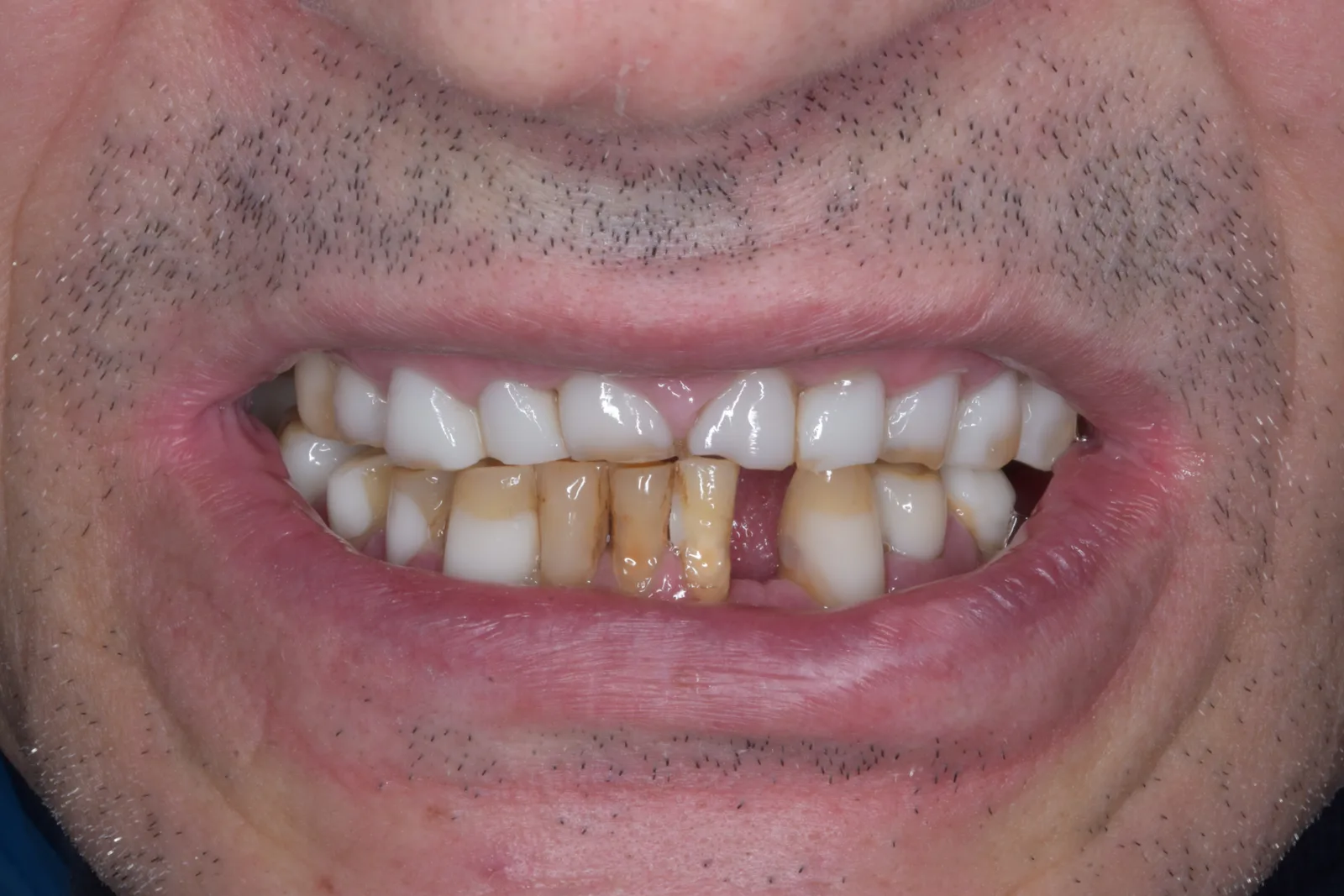 During
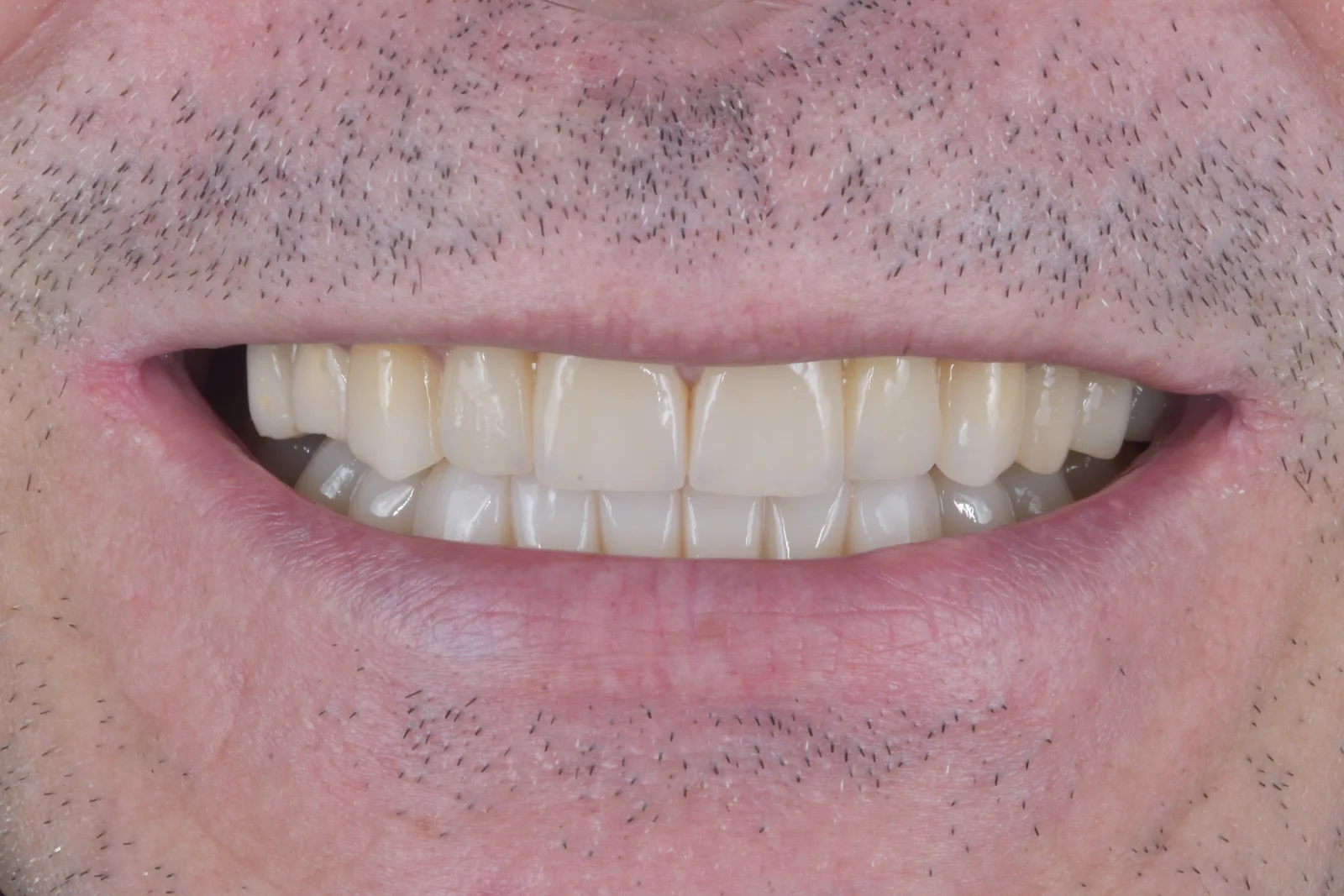 After
AfterPhotos published with patient consent