
Ceramic Crowns on Posterior Teeth
Smile Restoration in Two Visits
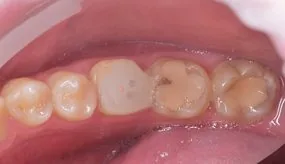 Before
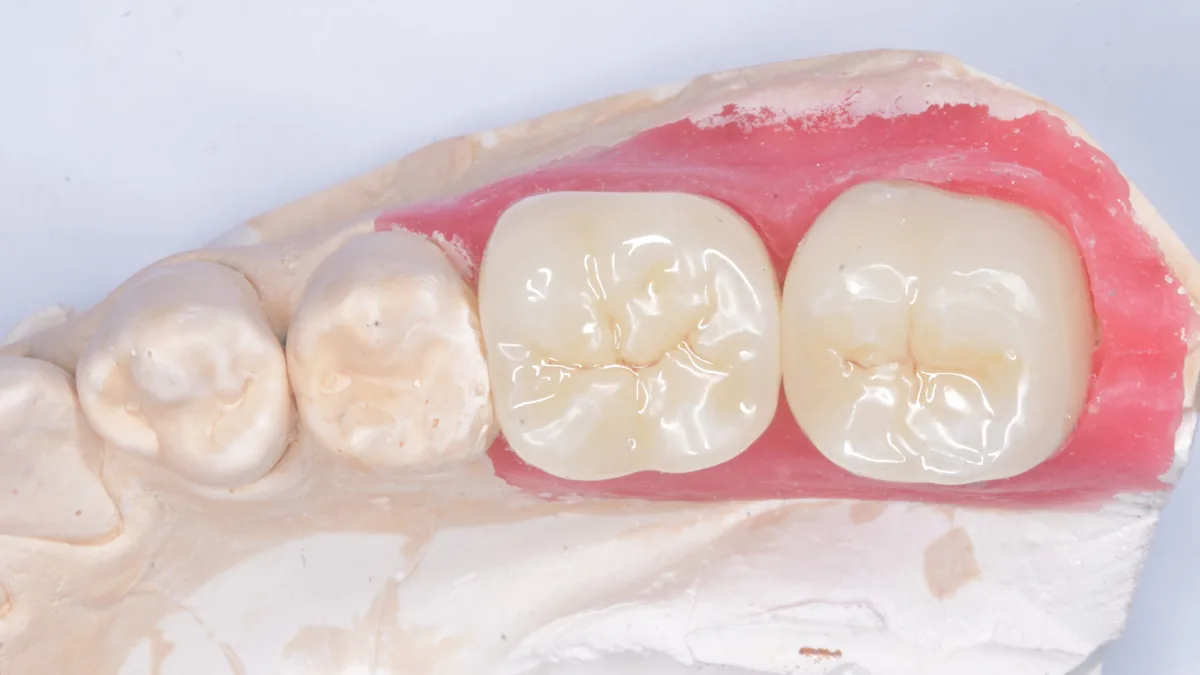 Model
Model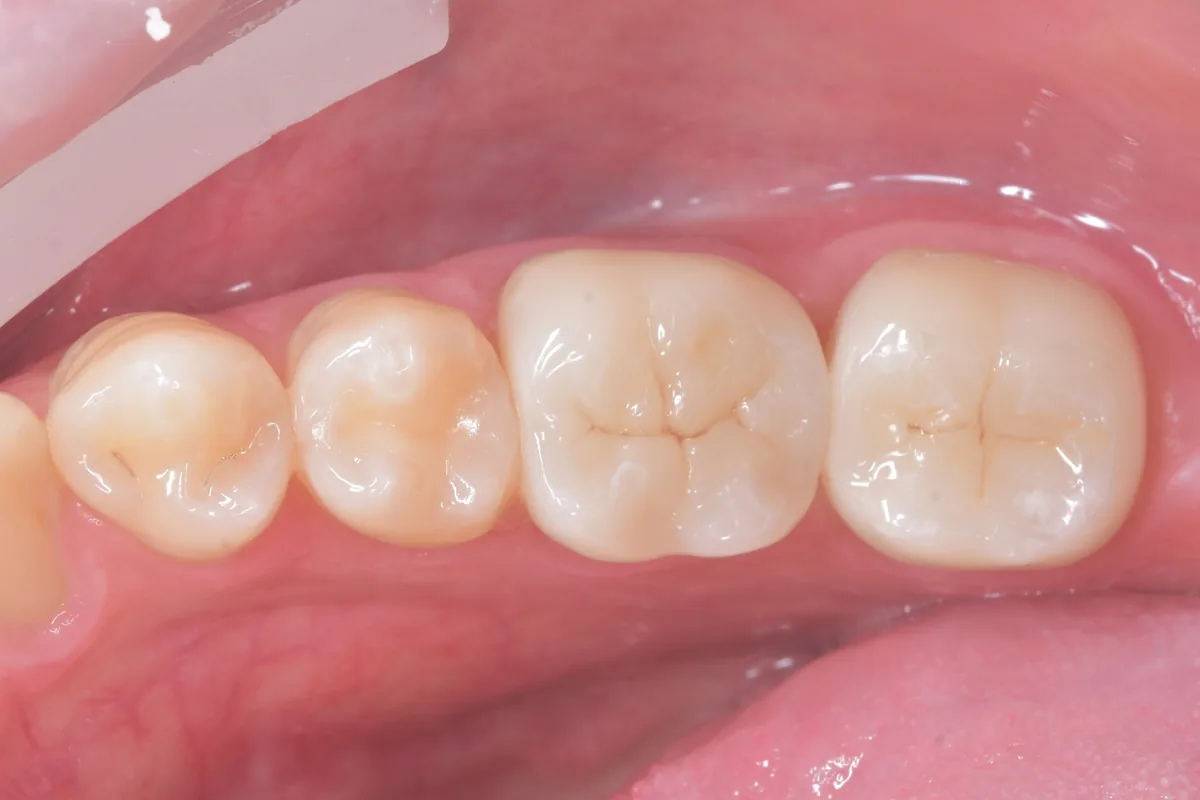 After
AfterThe patient presented with failing old fillings on upper posterior teeth. Extensive secondary caries and failed restorations that could not be re-filled. The teeth were sensitive to temperature and the patient experienced discomfort while chewing.
After examination and X-ray imaging: secondary caries under old fillings, significant destruction of the crown portion of two upper premolars (over 60%). Direct composite restoration would not provide adequate strength and longevity in this situation.
The decision was made to restore with two all-ceramic crowns. This method fully restores tooth anatomy, provides a natural appearance, and reliable protection against further destruction.
First visit
Removal of failed fillings, tooth preparation for ceramic crowns, high-precision impressions, and fabrication of temporary crowns to protect the prepared teeth.
Lab stage
The dental lab fabricated two all-ceramic pressed crowns. Each crown reproduces individual anatomy, including cusps, fissures and contact points, and is shade-matched to the adjacent teeth.
Second visit
Crown try-in, checking fit, occlusal contacts and aesthetics. After approval, adhesive cementation on prepared teeth using rubber dam and modern cementation systems.
Full restoration of chewing function and aesthetics. The ceramic crowns are indistinguishable from natural teeth. Natural colour, anatomical shape, correct contact points. The patient noted complete absence of discomfort and confidence while chewing from day one.
All-ceramic crowns are the modern standard of prosthetics, combining strength, biocompatibility and flawless aesthetics. Unlike metal-ceramic, they have no dark framework, cause no allergic reactions, and transmit light just like natural enamel. Quality ceramic crowns last 15+ years with proper care.
Photos published with patient consent